Back
Designing Bills feature on Grof
2023 • Product Designer
What I did
Grof have Bussiness Account feature allowed companies to manage their funds with role-based access control. The platform supports three user roles: Approver (highest authority with full control), Finance (administrative control with access to most features except approvals), and Basic (limited access).
To better understand how modern fintech products handle bill management, I analyzed competitors such as Aspire and Spenmo. I studied their workflows, approval structures, and interface patterns to identify common practices and gaps. These insights helped inform how Grof’s Bills feature could provide clearer approval flows and better visibility into upcoming payments.
Key Actions
Approval Flows
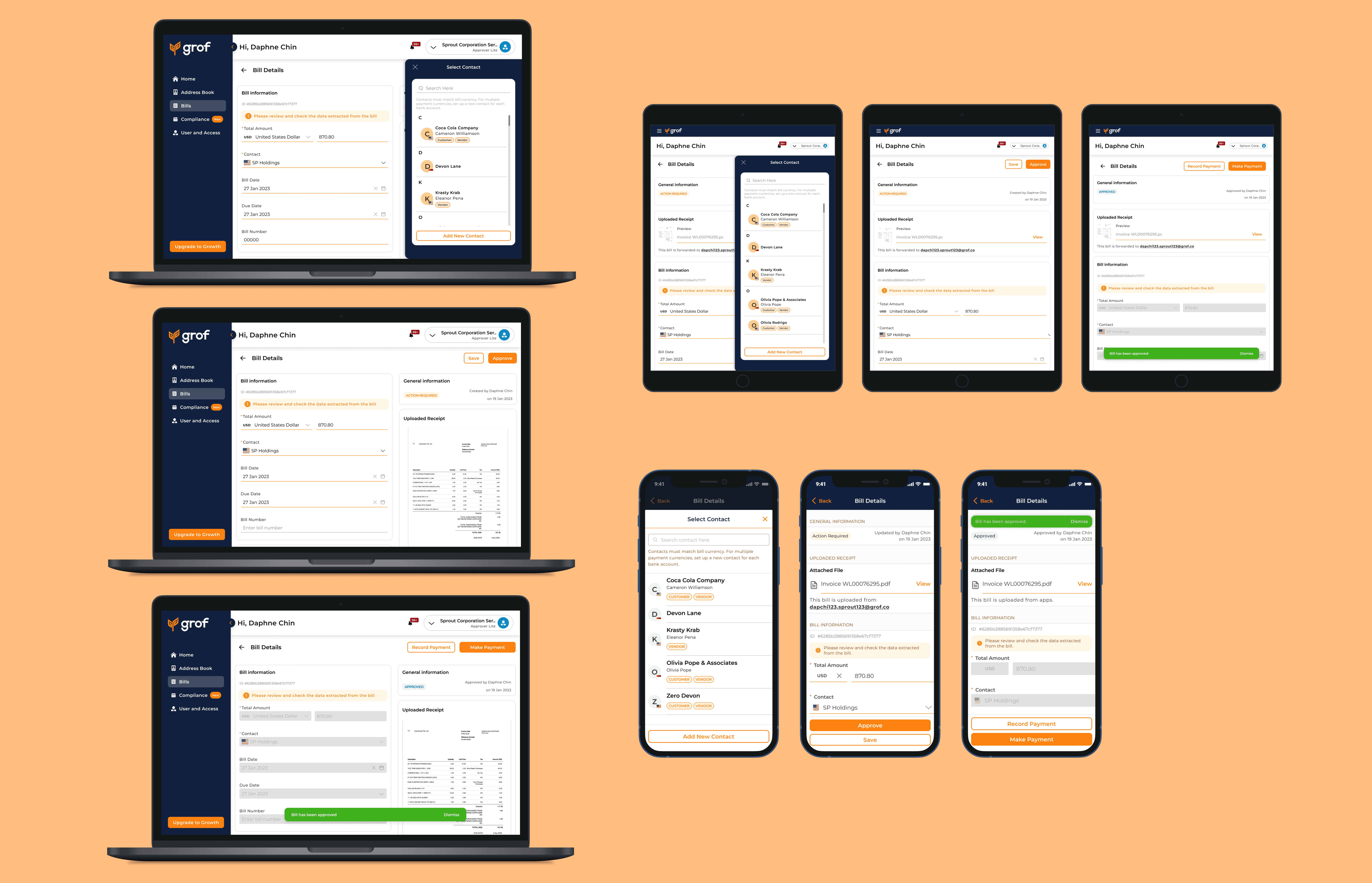
Designed distinct workflows for Approver and Finance roles, ensuring proper checks before payment. Basic user could only upload bills/invoice and track payment status.
User Impacts
Increased transparency in approval flows.
Cash Flow Visibility
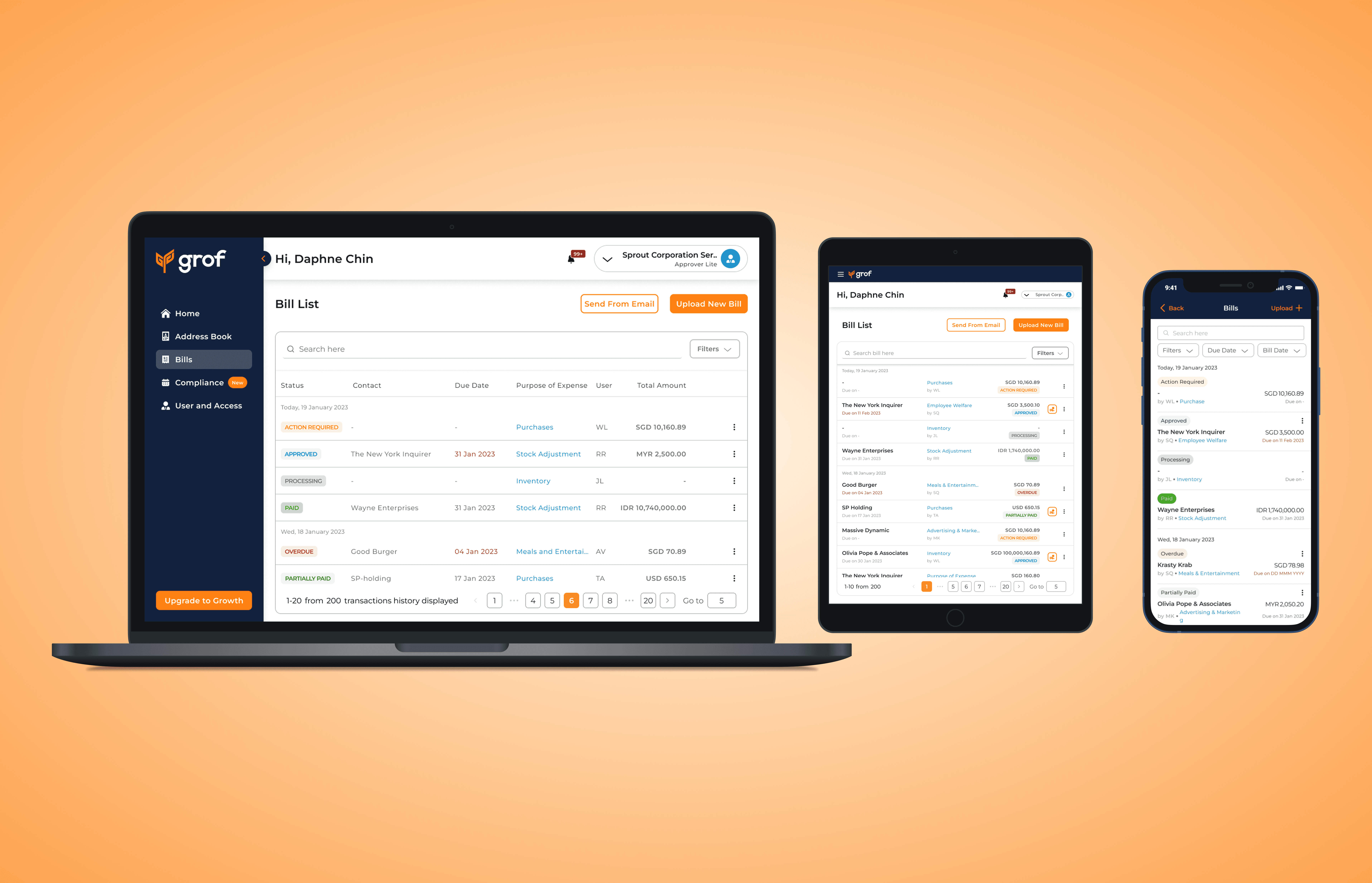
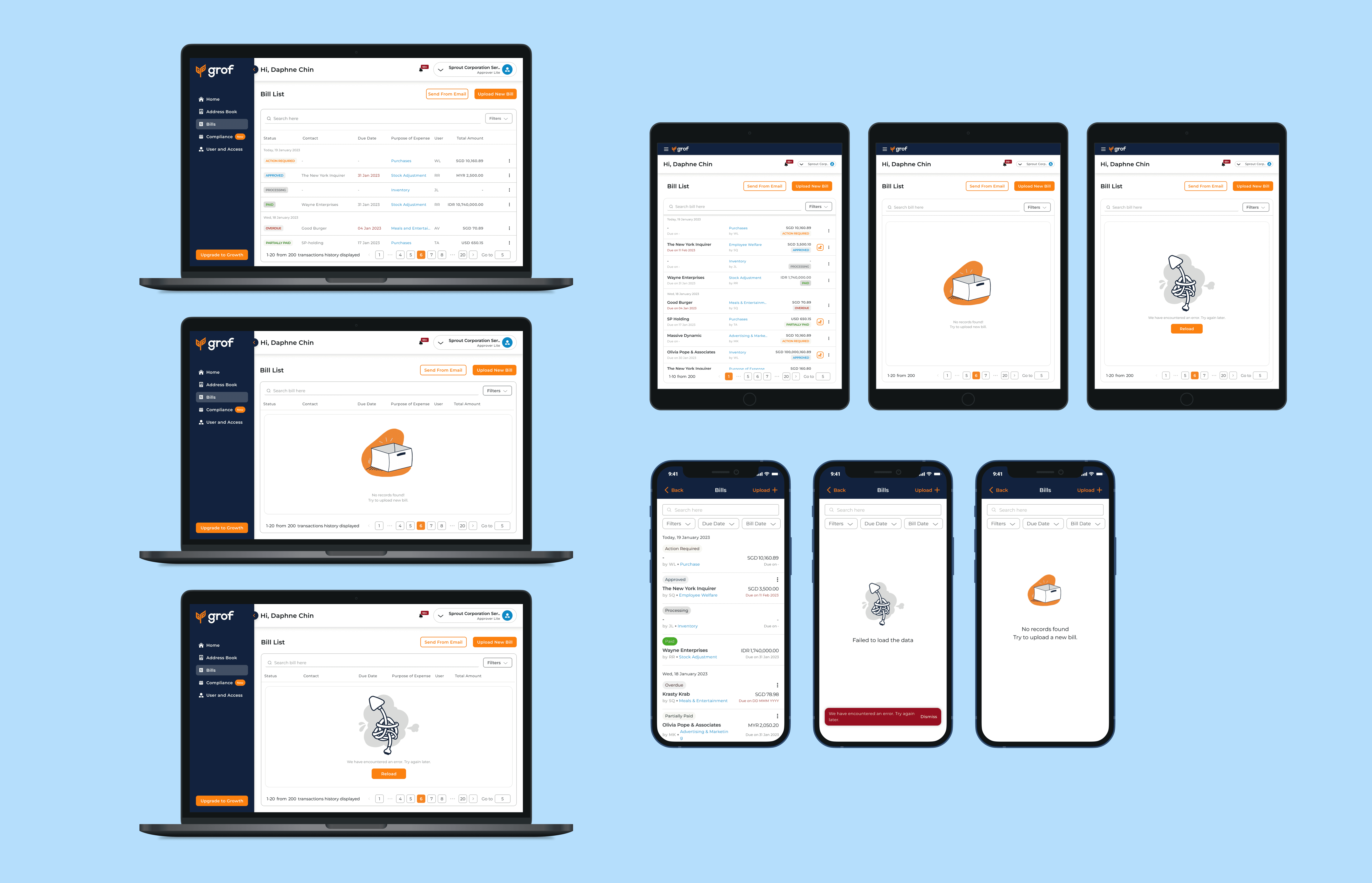
Created a bill list table on with clear upcoming due dates to help companies monitor upcoming bills and avoid late payments from Bills dashboard.
User Impacts
Improved financial visibility, helping users better manage cash flow.
Automation with OCR
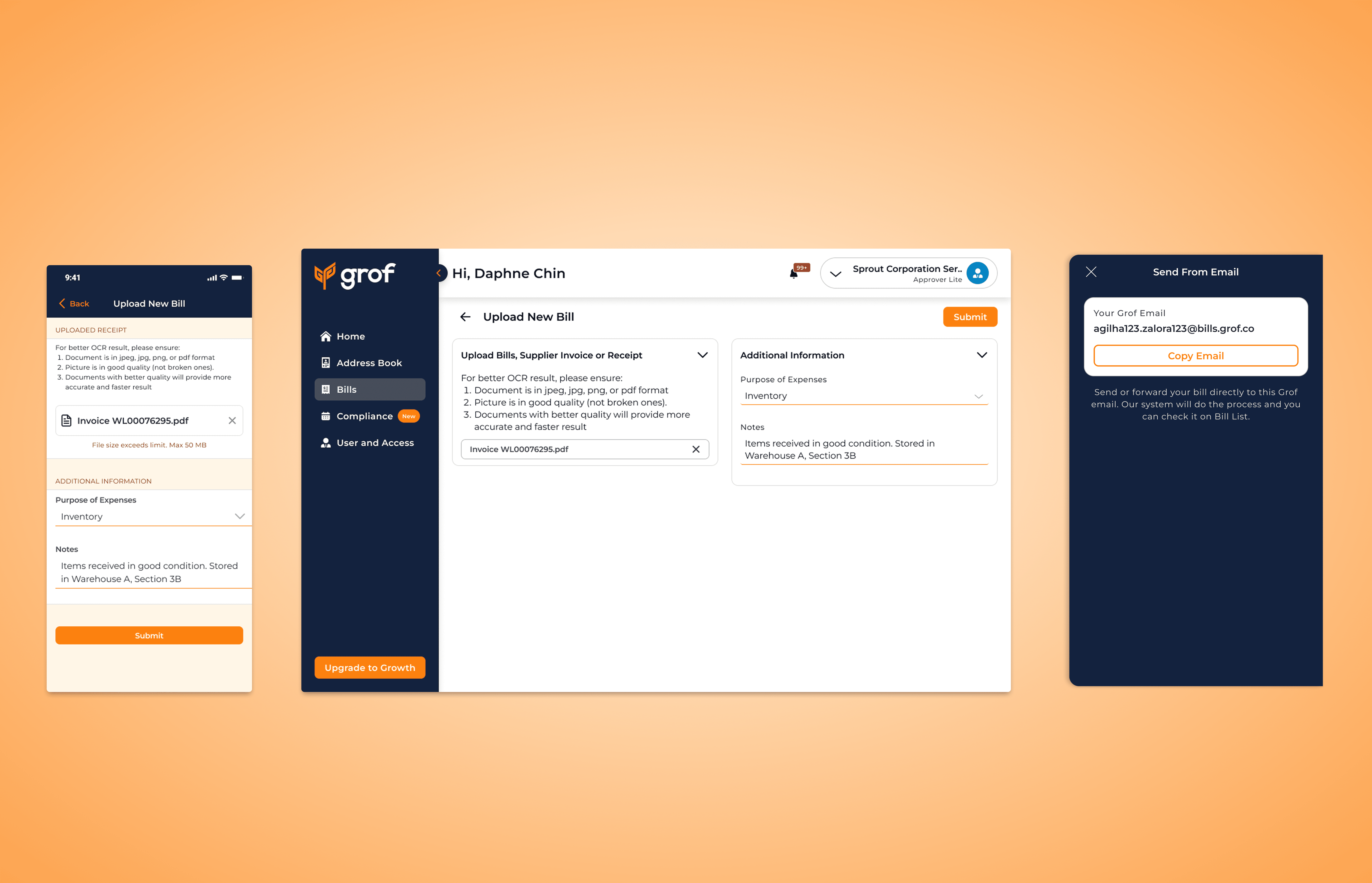
Introduced optical character recognition (OCR) for invoice uploads, minimizing human error. Users could upload bills directly in-app or forward them via email.
User Impacts
Reduced manual entry errors with OCR automation. ✨
Flexible Payments
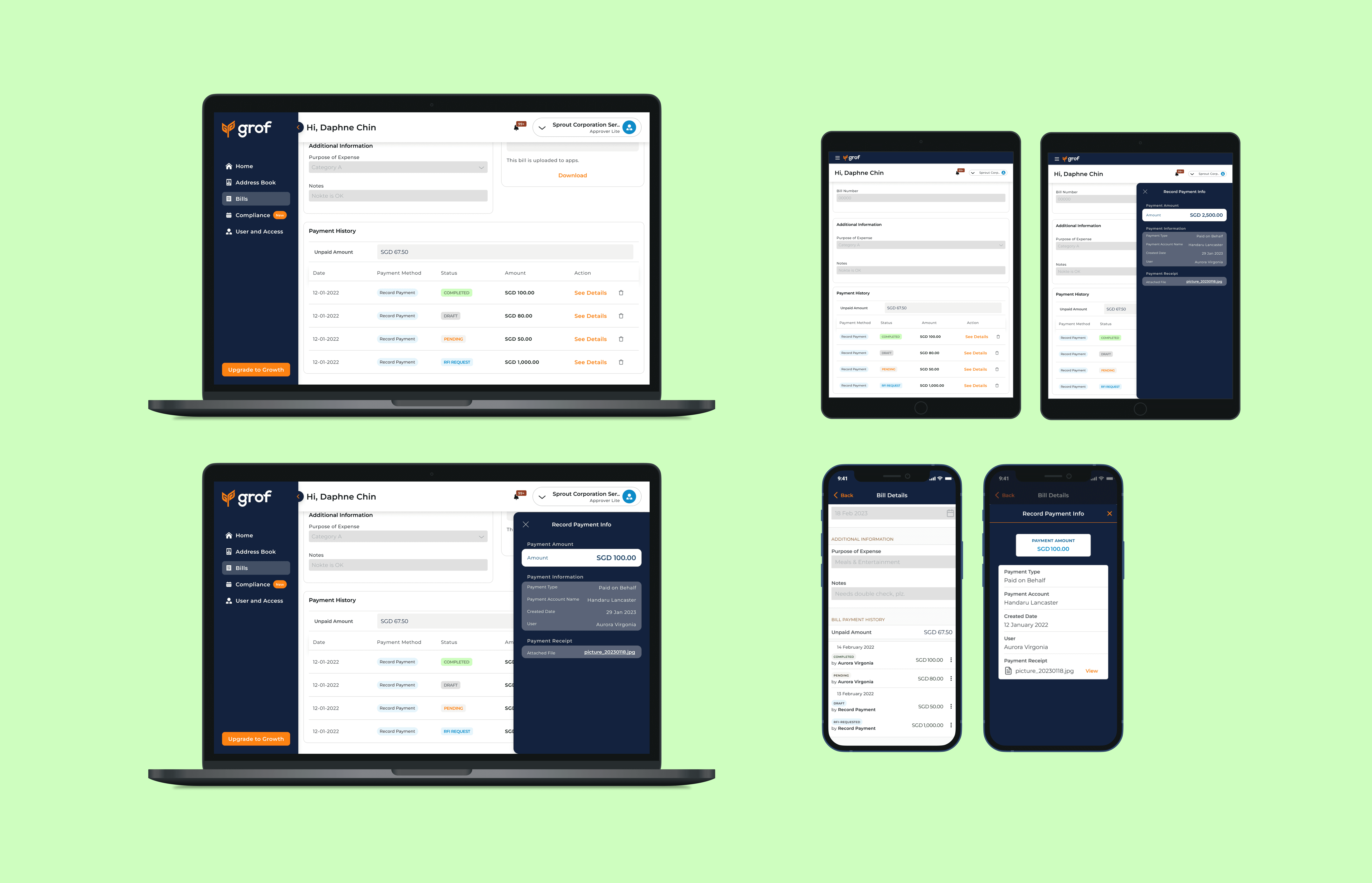
Enable payment either through Grof’s business account or by can recording external payments in the app.
User Impacts
Increased transparency in payment flows.